
Protocol Tracking / May 20, 2026
How to Track a Peptide Protocol Without Losing the Plot
Peptide research usually starts with a compound name. Real life starts later: a vial, a calendar, a dose, a symptom, a skipped day, a question for your doctor, and a foggy memory of what you actually did last week.
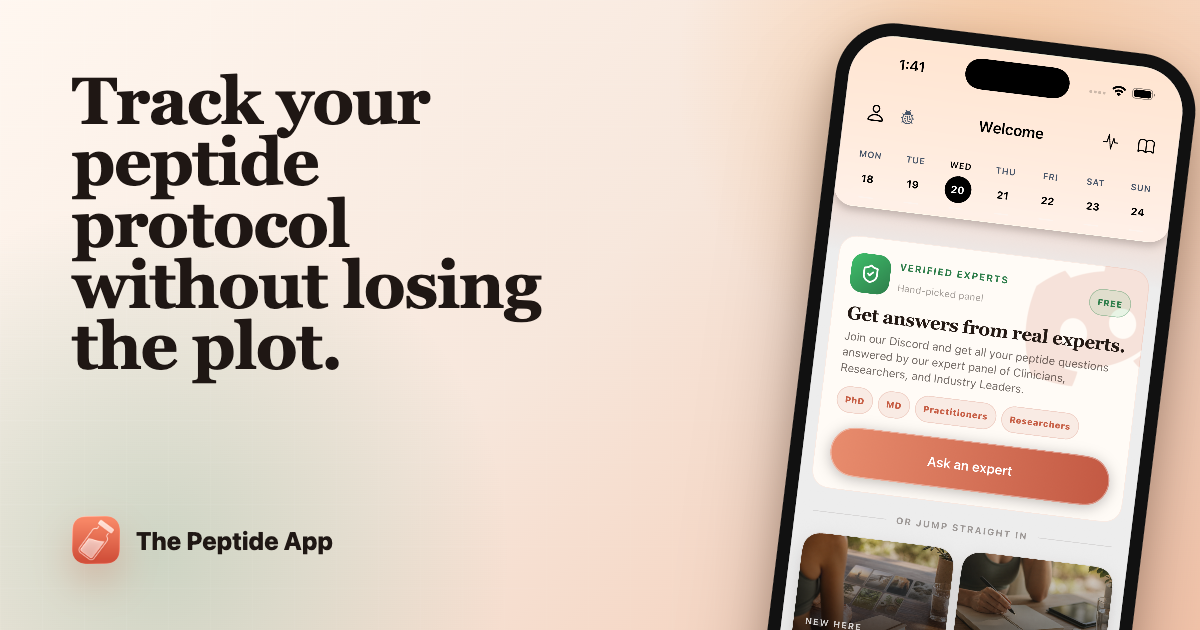
We built The Peptide App because that gap — between deciding to run a protocol and actually running it well — has no good solution. This guide covers what to track and why, whether you use the app or not.
Educational, not medical advice. Peptides can involve prescription drugs, compounded products, research chemicals, and a fast-changing regulatory landscape. Talk to a doctor before starting anything.
The Problem
Most peptide mistakes are workflow mistakes.
Most peptide content answers the obvious question: what is this compound supposed to do? The harder question is what happens after you've decided to try it. Did you reconstitute the vial correctly? Did you confuse milligrams and micrograms? Did you take the dose on the right day, at the right concentration? Did the side effect start before or after you changed the schedule?
A notes app can hold fragments. A spreadsheet can hold rows. But a protocol has relationships — compound, concentration, dose, phase, reminder, side effect, outcome, source. When those break down, you can't tell whether something is working or why things feel different. That's how people end up three weeks in with no real sense of what changed.
The Peptide App
Protocol plans, dose logs, reconstitution calculators, reminders, and outcome tracking — built specifically for this workflow.
Regulatory Context
The landscape is moving. Your records should reflect that.
The peptide space is genuinely in flux. BPC-157 sits on the FDA’s list of bulk substances with potential compounding safety concerns — flagged for immunogenicity questions and impurity characterization. In April 2026, the FDA moved to exclude semaglutide, tirzepatide, and liraglutide from the 503B compounding bulks list. These aren’t abstract policy debates. If you’re sourcing from a compounding pharmacy, changes like this can affect your supply overnight.
None of that tells you what to do individually. But it’s a strong argument for keeping records that go beyond "I think I took 200mcg." Source, formulation, label details, lot number — these matter most when something unexpected happens or the rules shift under you.
FDA: bulk substances with potential compounding safety risks
BPC-157 is among the substances the FDA has flagged for potential compounding safety concerns — specifically immunogenicity and impurity characterization. Worth knowing if you're tracking the source and formulation of what you're using.
FDA: April 2026 proposal to exclude semaglutide and tirzepatide from 503B compounding
The FDA moved to exclude GLP-1 compounds from the 503B compounding bulks list in April 2026. If you're on a compounded GLP-1, this directly affects your supply chain — and it's exactly the kind of change that makes source notes matter.
The Baseline
Start with a written protocol, not a vibe.
Before the first dose, write down the plan. Compound, intended goal, dose unit, frequency, route, cycle length, and what happens if you miss a dose. If a doctor gave you the protocol, attach it to the record. If you built it from forums and research papers, that's a cue to slow down — bring it to someone qualified before you start.
The protocol has to survive the practical moment: standing in your kitchen at 7am, looking at the vial, trying to remember if today is a dose day and at what concentration. That's not a moment for mental math. A protocol should include phases, timing, reminders, and what you're actually trying to measure. A recovery protocol looks for different signals than a metabolic or sleep protocol — mixing those up makes it impossible to evaluate whether anything is working.

Calculation Safety
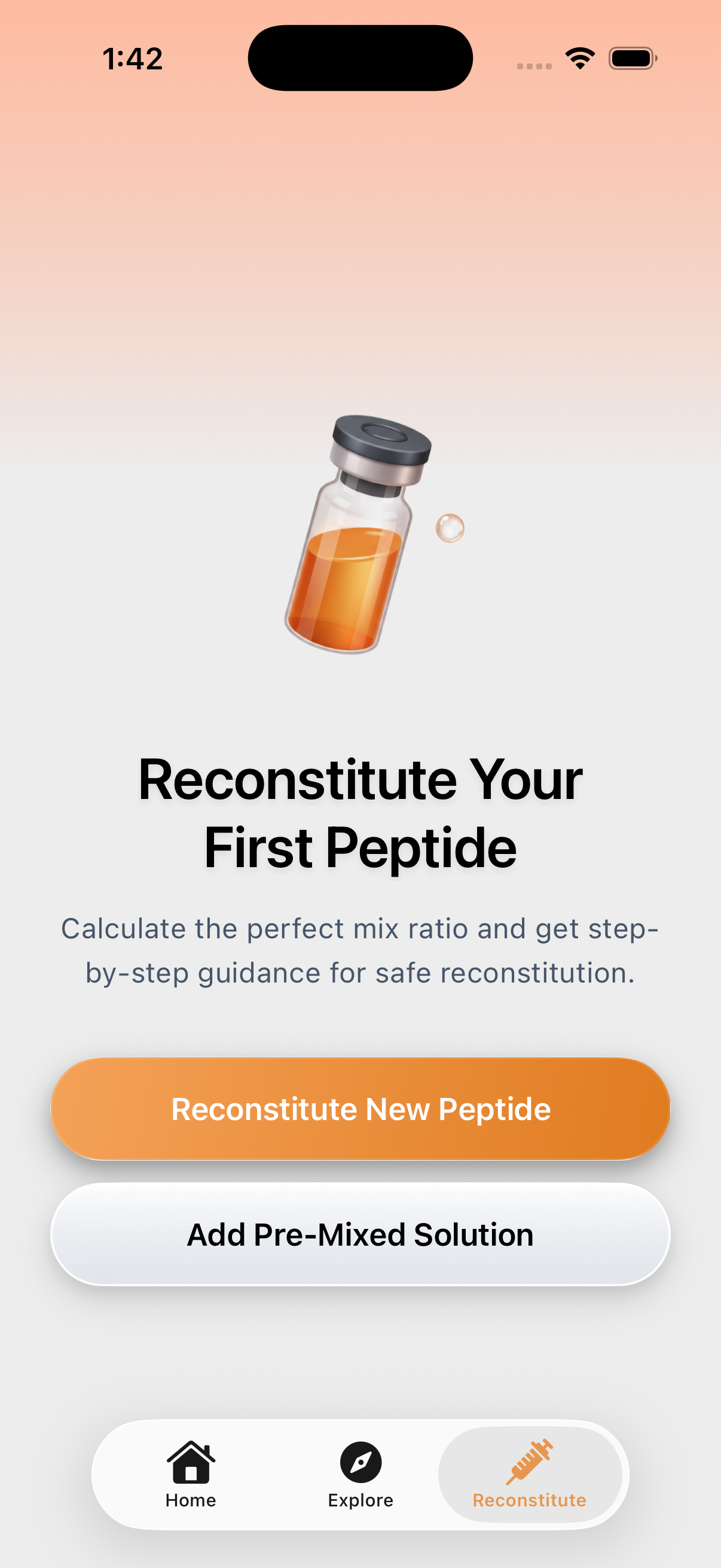
Treat reconstitution like a record, not a one-time calculation.
Reconstitution is where small unit errors become real problems. A vial is labeled in milligrams. A dose gets discussed in micrograms. A syringe is marked in units. Water volume changes concentration; concentration changes the draw. The chain of conversions is short enough to feel obvious and long enough to go wrong.
Save every calculation: vial size, bacteriostatic water volume, target dose, and resulting syringe units. Not just once — every time a new vial, dose, or water volume enters the picture. The goal isn't paperwork. It's having a clear record when something feels off and you need to figure out whether the math was right three weeks ago.
Daily Use
Log the boring details. They become the signal later.
A good peptide log is repetitive by design. Planned dose, taken dose, time, site, any notes. Skipped dose, why. Side effect, intensity, duration. Energy, sleep quality, pain, appetite, mood. Photo, weight, lab result. The goal isn't busywork — it's keeping the timeline intact before hindsight edits the story. Memory is not a reliable record.
What matters most is tracking the outcome that actually matches your goal. A recovery protocol wants pain levels, range of motion, soreness, and return to activity. A metabolic protocol cares about weight trend, waist, appetite, and glucose. A sleep protocol needs sleep duration, resting heart rate, HRV, and a morning mood score. Different goals need different data — if you're not tracking the right thing, you can't evaluate anything.
The minimum useful peptide tracking checklist
- Compound name, form, and concentration exactly as it appears on the vial or prescription label.
- Intended dose, dose unit, frequency, route, and start date.
- Every reconstitution calculation: vial size, water volume, target dose, and resulting syringe units.
- Each planned and taken dose — plus skipped, delayed, or adjusted doses with a note on why.
- Side effects, injection-site reactions, appetite shifts, sleep changes, pain, stiffness, mood, energy.
- Outcome markers matched to the goal: weight, photos, waist, soreness, HRV, sleep, labs, or a morning check-in.
- Vendor, pharmacy, or compounding source, including COA or prescription reference.
- Questions to bring to a doctor before changing the plan.
Source Notes
Where it came from belongs next to what you took.
“Where did this come from?” and “what did I take?” get separated constantly. Don't let them. Vendor, pharmacy, compounding source, lot number, COA reference — those belong next to the dose log, not in a different folder or a mental note you'll forget.
Formulation and quality can vary meaningfully between sources. If something unexpected happens, you want to know exactly what you had and where it came from. That's also useful context when talking to a doctor who isn't familiar with your specific vendor or compounding pharmacy — it turns “I took a peptide” into an actual medical history.
Review Cadence
Set the review schedule before you start.
Pick a cadence before the protocol begins, not when you're feeling impatient two weeks in. Daily for dose completion and anything acute. Weekly for subjective check-ins, photos, weight. Doctor-directed timing for labs or dose adjustments. A fixed review schedule keeps you from reacting to noise and missing actual patterns.
Consistent logging is what makes the review worth doing. A single bad day means nothing on its own. Three weeks of data shows a pattern. When you sit down with a doctor or decide whether to stop, adjust, or keep going, you're working from a record — not trying to reconstruct one from memory.
Built for this workflow
Protocol plans, dose logs, reconstitution math, and outcome tracking — in one place.
The Peptide App keeps your protocol in your pocket: structured plans, saved calculations, daily reminders, and a record that's actually useful when you talk to a doctor or decide whether to adjust.